 Shannon Brandao
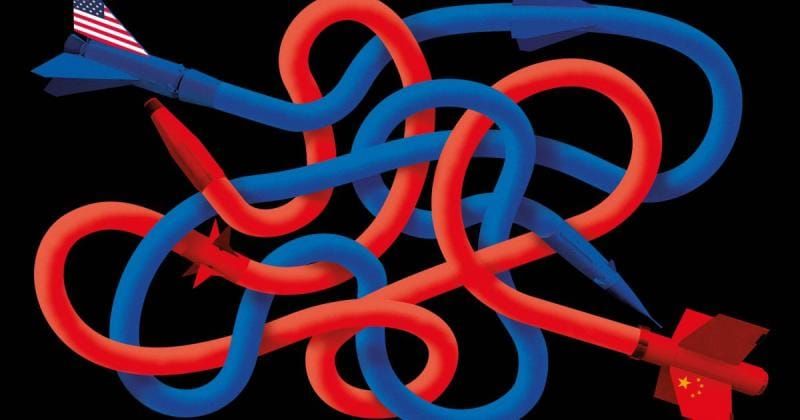
From the article: "Andrew F. Krepinevich, Jr., Foreign Affairs [excerpt]: With #Taiwan as the assumed flash point, U.S. strategists have offered several theories about how such an attack might play out. First is a 'fait accompli' conquest of Taiwan by #China, in which the People’s Liberation Army employs missiles and airstrikes against Taiwanese and nearby U.S. forces while jamming signals and communications and using #cyberattacks to fracture their ability to coordinate the island’s defenses. ...
A second path envisions a U.S.-led coalition beating back China’s initial assault on the island. This rosy scenario finds the coalition employing mines, antiship cruise missiles, submarines, and underwater drones to deny the PLA control of the surrounding waters, which China would need in order to mount a successful invasion. Meanwhile, coalition air and missile defense forces would prevent China from providing the air cover needed to support the PLA’s assault, and electronic warfare and cyber-forces would frustrate the PLA’s efforts to control communications in and around the battlefield. ...
Given that both China and the United States possess #nuclear arsenals, however, many strategists are concerned about a third, more catastrophic outcome. They see a direct #war between the two great powers leading to uncontrolled escalation. In this version of events, following an initial attack or outbreak of armed conflict, one or both belligerents would seek to gain a decisive advantage or prevent a severe setback by using major or overwhelming force. Even if this move were conventional, it could provoke the adversary to employ nuclear weapons, thereby triggering Armageddon. Each of these scenarios is plausible and should be taken seriously by U.S. policymakers.
Yet there is also a very different possibility, one that is not merely plausible but perhaps likely: a protracted conventional war between China and a U.S.-led coalition. Although such a conflict would be less devastating than nuclear war, it could exact enormous costs on both sides. It also could play out over a very wide geographic expanse and involve kinds of warfare with which the belligerents have little experience. For the United States and its democratic allies and partners, a long war with China would likely pose the decisive #military test of our time.
BATTLES WITHOUT BOMBS
A military confrontation between China and the United States would be the first great-power war since World War II and the first ever between two great nuclear powers. Given the concentration of economic might and cutting-edge technological prowess in Japan, South Korea, and Taiwan—all three advanced democracies that are either close allies or partners of the United States—such a war would be fought for very high stakes. Once the fighting had started, it would likely be very difficult for either side to back down. Yet it is far from clear that the conflict would lead to nuclear escalation. ..."
#news #geopolitics