 Shannon Brandao
(Right Click on Article's Hyperlink Above to Open Article in a New Tab...)
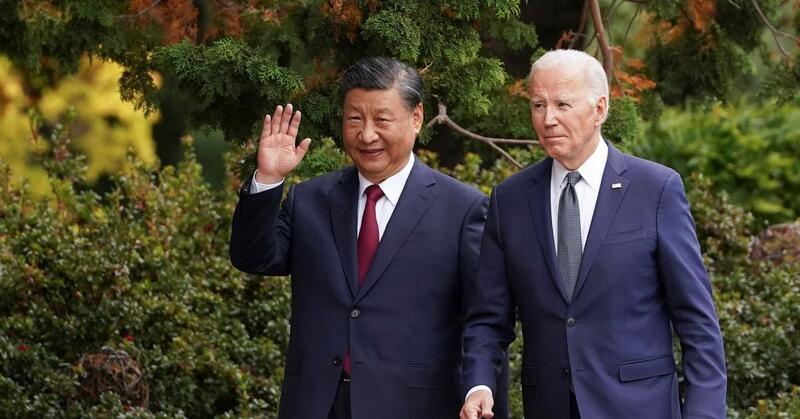
"Reuters Breakingviews [excerpt]: U.S. President Joe Biden and China’s #XiJinping, who met in San Francisco on Wednesday, may disagree on the terminology. Yet there is a huge shift underway in the Sino-American relationship. To peer beyond the rhetoric, Reuters Breakingviews examined various flows between the two countries which together account for 40% of global GDP. The signs largely point toward a conscious and structural #decoupling.
TRADE UNTIED
Start with U.S.-China #trade, the bedrock of the bilateral relationship. The flow of goods between the two accelerated sharply after the People’s Republic joined the World Trade Organization in 2001, to the benefit of American consumers and Chinese workers. The headline numbers are still robust: U.S. imports of goods from China rose to $536 billion in 2022. However, the figure masks several trends.
First, growth in American imports from China is faster in goods which are not subject to U.S. tariffs. This shows how the trade war launched by former U.S. President Donald Trump in 2018 is biting."
"FRAYING FINANCE
In #finance, the separation is more pronounced. Western #investors have slashed their exposure to the planet’s second-largest #economy.
The average allocation of global equity funds to Chinese assets peaked at 3.13% in April 2015. As of September 2023, it was 1.75%, data from fund flow tracker EPFR shows. That partly reflects a broader retreat from emerging markets after the U.S. Federal Reserve raised interest rates. But it seems unlikely that allocations will fully recover even if investors rediscover their appetite for risk.
Take the $771 billion U.S. Federal Retirement Thrift Investment Board, which on Tuesday said it will exclude stocks listed in China and Hong Kong from its international fund due to the risks associated with rising geopolitical tensions.
..Meanwhile, companies from the People’s Republic have also largely stopped tapping American #capital. Chinese firms have raised just $529 million from initial and secondary stock offerings in the United States in the year to mid-October. That’s far below the $29 billion peak in 2014 when e-commerce giant Alibaba (9988.HK), listed its shares in New York, Dealogic data shows."
#news #business