 Shannon Brandao
Shannon's excerpt from the article: "EurasianTimes [excerpt]: Giving out the usual caveat that 'not every student from #China, of course, is a #spy,' a report in Der Spiegel notes about security officials in #Bavaria advising to be wary of the large influx of Chinese students.
They are particularly concerned about the grants awarded by the state-run China Scholarship Council (CSC). Around 5,000 undergrad and graduate Chinese students have been sent to #Germany under the program. As part of the conditions, the participants 'must declare their allegiance to China and the Communist Party in writing, stay in regular contact with the embassy, and follow any instructions they receive.'
'They can also be required to provide information about the Chinese community in exile, dissidents, and minorities like the Uighurs,' Körner recommends that universities be careful when admitting CSC grant recipients. 'The risk is real,' he says.
...Chinese spies are reportedly working relentlessly to get access to cutting-edge technologies, including #biotechnology, #artificialintelligence, #quantumtechnology, and #hypersonic #technology, according to the German security service. They are dual-purpose technologies and can be used for #military ends.
According to the agency, company takeovers in Germany are part of a larger strategic plan to give China an edge in the worldwide fight for expertise.
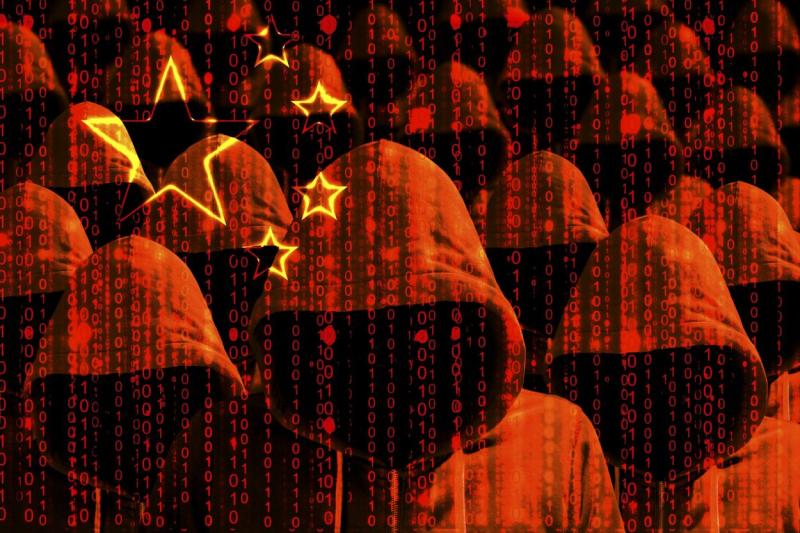
China’s spy attacks are increasing in sophistication and frequency. The businesses are not the only victims of Chinese cyber-spies; they are increasingly attempting to influence German politics while closely monitoring minorities and dissidents.
Diplomats and agents in Chinese embassies and consulates are allegedly establishing broad networks of contacts to secure the services of active and former German politicians.
Ranking the Chinese cyber hackers at par with the Russians, German security agencies say that the Chinese employ less brute force, lest they attract unwarranted attention. Instead of splashy moves, Chinese cyber spies would stealthily enter the systems and stay put for several years, gleaning sensitive information. As per Speigel, numerous companies listed on Germany’s blue-chip stock index, the DAX, have been targeted by Chinese cyberattacks, such as BASF and Daimler.
...The conflict between Russian President Vladimir Putin and Ukraine could be the worst issue confronting #Europe right now. However, China poses the greatest threat in the long term. Thomas Haldenwang, chief of Germany’s internal security agency, the Federal Office for the Protection of the Constitution, warns, 'Russia is a storm. China is climate change.'
Reports by Speigel make it abundantly evident how Chinese spies have enlisted European politicians. Since assuming office in 2012, Chinese President Xi Jinping has devoted all of his attention to expanding an already vast security apparatus. Furthermore, when it comes to monitoring, new rules have given carte blanche to government agents when it comes to surveillance."
#News