 Shannon Brandao
From the article: "🇨🇳👨💻🏠 Business Insider [excerpt]: A US ratings agency reportedly told its employees in #China to work from home the week it delivered a damning assessment of the country's #economy.
Moody's told its China-based staff not to come into the office shortly before it slashed the country's #creditrating, per the Financial Times.
Two unnamed employees told the FT they believe this is because Moody's was worried it might be questioned by Chinese officials in retaliation.
Workers in #Beijing and #Shanghai were instructed to stay home days before Moody's announced it was cutting its outlook for the country from 'stable' to 'negative,' and staff in #Hong [K]ong were reportedly told to avoid traveling to the Chinese mainland.
'They didn't give us the reason … but everyone knows why,' one China-based Moody's employee told the FT. 'We are afraid of government inspections.'
'The Chinese authorities can make trouble for you if they want to,' another employee said, who said that Moody's was concerned about what regulators might do following the credit downgrade.
'Our commitment to maintaining the confidentiality and integrity of the ratings process is paramount and therefore, we cannot comment on internal discussions,' a Moody's spokesperson said in a comment to Business Insider.
It comes as Western companies operating in the country face increasing pressure amid rising tensions between the US and China, with the US government hitting its geopolitical rival with a series of sanctions in an attempt to cripple China's microchip industry.
The offices of US firms Mintz Group, Bain & Company, and Capvision were all raided earlier this year by Chinese authorities, with some employees being questioned and detained.
American #companies have also been targeted in other ways, with Chinese regulators effectively scuttling Intel's $5.4 billion acquisition of Israeli microchip firm Tower Semiconductor, and the Chinese government banning some officials from using Apple's iPhones.
Updates to its anti-espionage #laws, which were passed in April, are also making it tougher for US businesses to operate in China.
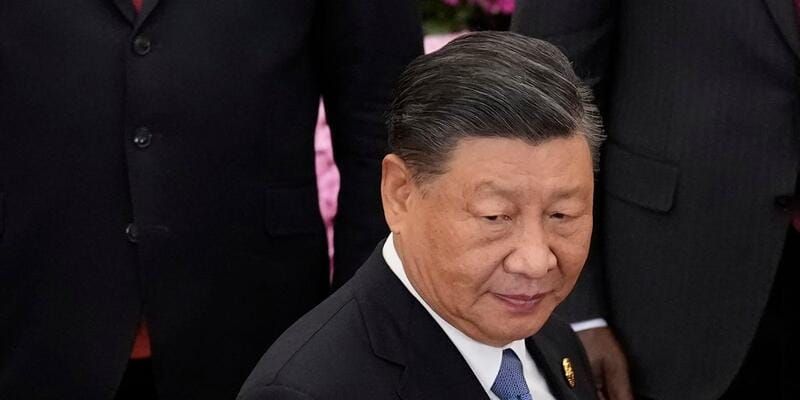
...The anxiety over operating in China comes as #XiJinping's regime attempts to kick-start the country's stuttering #economy.
Moody's warned that China's stagnant growth and ongoing #property crisis could leave it struggling to pay its debts, and said it expected GDP to grow by just 4% in 2024 and 2025.
The rating agency's analysis prompted a fierce response, with China's Ministry of Finance saying it was 'disappointed' by the decision and the National Development and Reform Commission criticizing the move as driven by 'bias and misunderstanding of China's economic outlook'."
#news #business