 Shannon Brandao
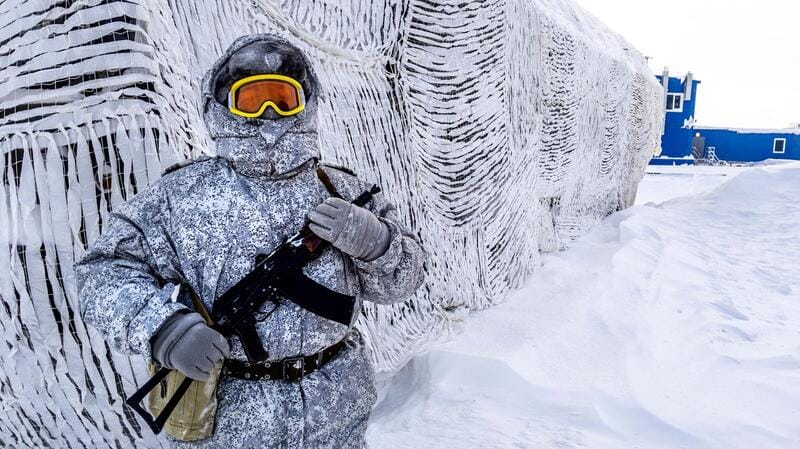
Shannon's excerpt from the article: "Scientific American [excerpt]: More aggressive posturing by #Russia and #China in the fast-melting #Arctic is raising red flags for the #Pentagon.
Russia is working to quickly flex its muscle in the region through a partnership with China to build infrastructure along the Northern Sea Route, one of two major shipping lanes across the Arctic. That agreement, announced exactly a year after Russia invaded #Ukraine, was viewed by experts as a signal that Russia and China increasingly share economic interests in the icy polar region.
Then in August, a fleet of 11 Russian and Chinese warships sailed from the Sea of Japan through the Bering Strait into the Pacific Ocean, passing close to the U.S.-held Aleutian Islands off the Alaskan coast. The Russian news agency Interfax said the ships were conducting 'joint anti-submarine and anti-aircraft exercises.'
'Russia has a heavy emphasis on the Arctic, and over half of it is in Russian territory,' Iris Ferguson, deputy assistant secretary of Defense for Arctic and global resilience, said in an interview with E&E News. 'I don’t want to suggest they don’t have a place there. But we are concerned about increasing levels of investment in Arctic #military capabilities.'
Those realities require a reset of U.S. Defense Department policies in the Arctic region, including 'changes in how we’re training and equipping [U.S. forces] and rethinking the kinds of operations we need to have there,' Ferguson said. Elements of those changes will be laid out in DOD's Arctic strategy, expected to be released this month.
The document will replace a 2019 version released three years before Russia invaded Ukraine, effectively alienating itself from seven partner Arctic nations: the United States, Canada, Norway, Sweden, Finland, Denmark and Iceland. Experts noted China does not have territory in the Arctic but seeks access and #influence in the region, something it hopes to advance through its Russian #alliance.
Diplomatic relations among Arctic countries are often handled through the eight-member Arctic Council, whose chairmanship rotates every two years. Russia chaired the council from 2021 to 2023 and was shunned after its Ukraine invasion. Norway assumed the chairmanship in May.
The Biden administration is strengthening its focus on the region by creating senior positions to oversee Arctic policy, including the one held by Ferguson, who assumed the role last year. It also created a senior State Department position and named Mike Sfraga, chair of the U.S. Arctic Research Commission, to be ambassador-at-large. The Senate has yet to confirm his nomination."
#News #geopolitics